Diaquabis(4-bromobenzoato-κO)bis(N,N-diethylnicotinamide-κN1)copper(II)


Yazarlar (5)
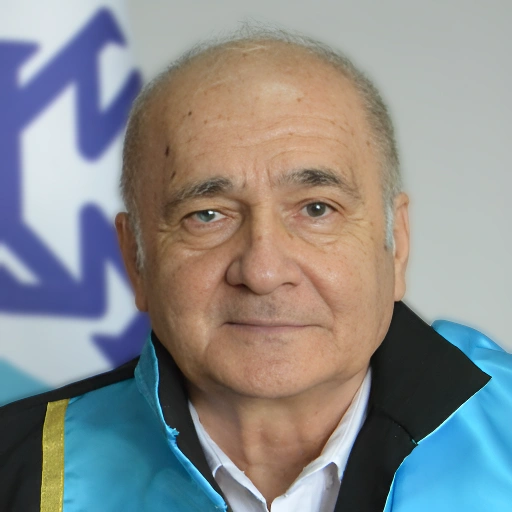
Prof. Dr. Hacali NECEFOĞLU Kafkas Üniversitesi, Türkiye

Doç. Dr. Füreya Elif ÖZTÜRKKAN Kafkas Üniversitesi, Türkiye

Vijdan Öztürk

Doç. Dr. Vedat ADIGÜZEL Kafkas Üniversitesi, Türkiye
Tuncer Hökelek
Hacettepe Üniversitesi, Türkiye
Hacettepe Üniversitesi, Türkiye
| Makale Türü |
 Özgün Makale
(SSCI, AHCI, SCI, SCI-Exp dergilerinde yayınlanan tam makale)
Özgün Makale
(SSCI, AHCI, SCI, SCI-Exp dergilerinde yayınlanan tam makale)
|
||
| Dergi Adı | ACTA CRYSTALLOGRAPHICA SECTION E-CRYSTALLOGRAPHIC COMMUNICATIONS (Q4) | ||
| Dergi ISSN | 2056-9890 Dergi Bilgileri (2011) | ||
| Dergi Tarandığı Indeksler | SCI | ||
| Makale Dili | İngilizce | Basım Tarihi | 09-2011 |
| Kabul Tarihi | 24-08-2011 | Yayınlanma Tarihi | 31-08-2011 |
| Cilt / Sayı / Sayfa | 67 / 9 / – | DOI | 10.1107/S1600536811034787 |
| Makale Linki | http://dx.doi.org/10.1107/s1600536811034787 | ||
| UAK Araştırma Alanları |
Fiziksel Kimya
|
||
| Özet |
| The asymmetric unit of the title mononuclear CuII complex, [Cu(C7H4BrO2)2(C6H6N2O)2(H2O)2], contains one half-molecule, the CuII atom being located on an inversion center. The unit cell contains two nicotinamide (NA), two 4-bromobenzoate (PBB) ligands and two coordinated water molecules. The four O atoms in the equatorial plane around the CuII ion form a slightly distorted square-planar arrangement, while the slightly distorted octahedral coordination is completed by the two N atoms of the NA ligands in the axial positions. The dihedral angle between the carboxylate group and the adjacent benzene ring is 22.17 (16)°, while the pyridine ring and the benzene ring are oriented at a dihedral angle of 82.80 (6)°. In the crystal, N—H⋯O, O—H⋯O and C—H⋯O hydrogen bonds link the molecules into a three-dimensional network. A weak C—H⋯π interaction is also observed. |
| Anahtar Kelimeler |
BM Sürdürülebilir Kalkınma Amaçları

| Atıf Sayıları | |
| Google Scholar | 15 |